Boat, Flight or Helicopter: Which Kaikōura Whale Watching Tour Should You Book?

The Kaikōura whale watch flight gets you thirty or forty-five minutes above the coast with no swell to fight; the boat gets you close to two hours on the water and the only published no-sighting refund in town; the helicopter costs the most of the three and adds the one thing neither of the others can, a scenic landing on the way back down. None of the three guarantees a whale, and only one of them hands money back if the trip comes up empty. This guide, current as of August 2026, compares the real prices, the distance rules pilots and skippers actually fly and sail under, and which format earns its price first if you're only booking one.
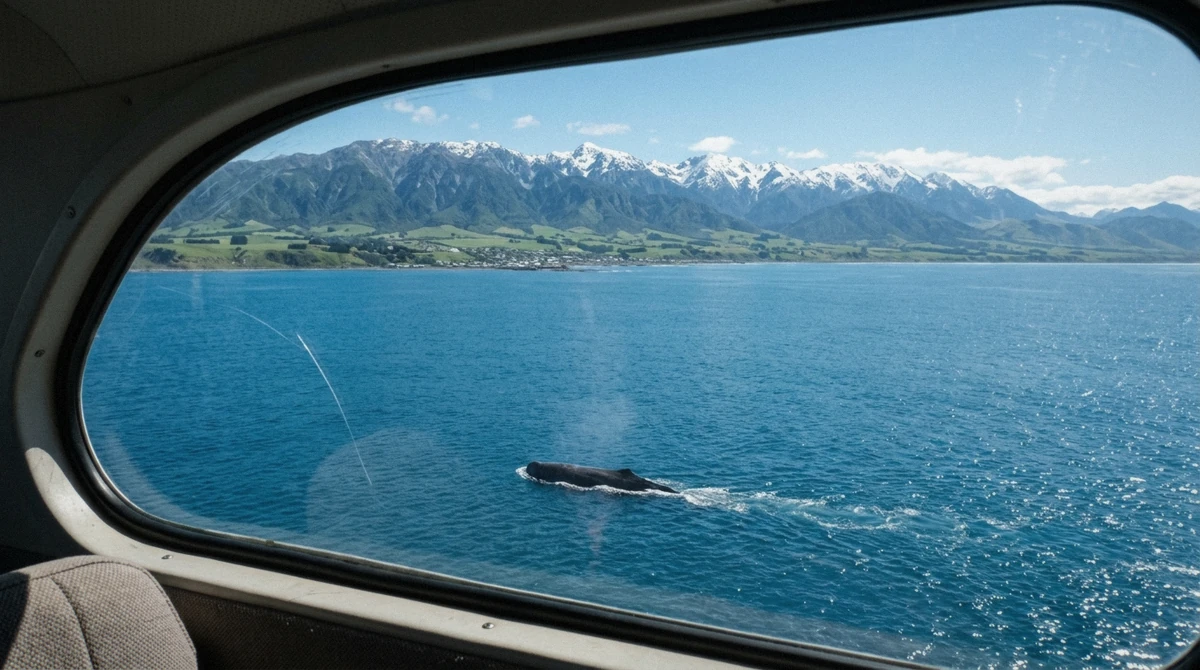
Quick answer
Book the boat first if a refund matters to you: the Whale Watch Kaikōura cruise is the only format with a published no-sighting policy, an 80% refund of the fare. Book the whale watch flight if you want the coastline and the Seaward Kaikōura Range in the same frame with zero swell, and save the helicopter tour for when the scenic landing is worth the extra cost to you.
Key takeaways
- Only the Whale Watch Kaikōura cruise refunds 80% of the fare if no whale turns up; neither aerial operator publishes a no-sighting refund
- The 30-minute flight starts at $162 per person and the 45-minute helicopter at $501, both current as of August 2026
- By law, aircraft can't fly below 150 metres over the sea, or within 150 metres of a whale when flying below 600 metres, so the view from the air is wider, not closer
- There is no seaplane operating in Kaikōura, whatever the search results suggest; the fixed-wing flights leave Kaikōura Aerodrome on wheels
- For the departures least likely to run into rough seas, see our best time to go guide
The Three Formats, Side by Side
One cruise, one fixed-wing flight and one helicopter tour cover the three ways to meet the whales from Kaikōura. The comparison below uses each one's current listed price.
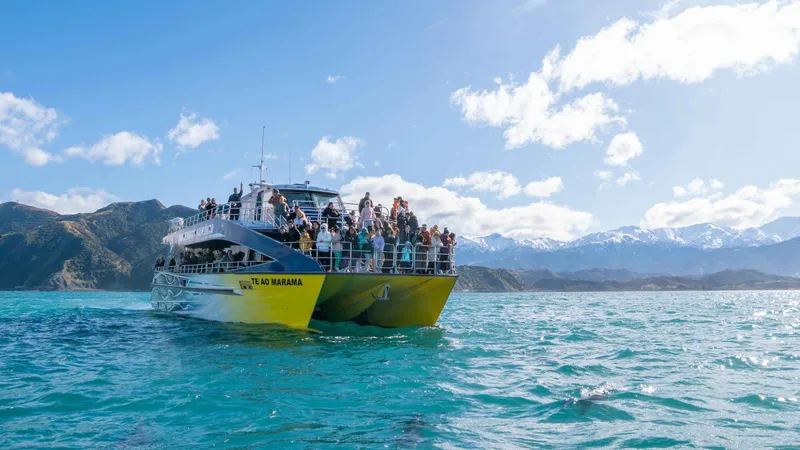 from $103
Top Pick — 3,700+ Reviews
from $103
Top Pick — 3,700+ Reviews Kaikōura Sperm Whale Cruise with Hydrophone Tracking
Head out over the Kaikōura Canyon on a purpose-built catamaran while the crew listens for sperm whale clicks through an underwater microphone, positioning the boat before the whale…
- Crew track sperm whales by their clicks before they surface
- Watch the famous tail-up dive from water level
- Dusky dolphin pods and fur seals on most departures
- 80% refund if no whale is sighted
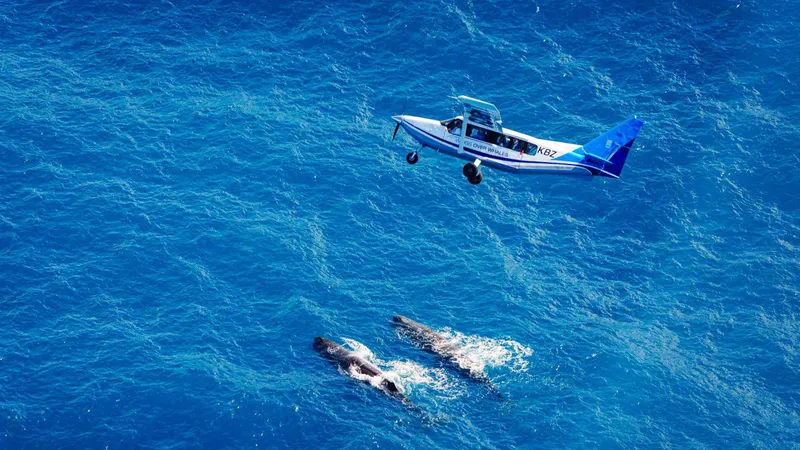 from $162
Whale-Spotting Scenic Flight over the Kaikōura Canyon
Board a small fixed-wing aircraft and look straight down on sperm whales resting at the surface — from the air you see the entire animal, nose to flukes…
- See the whale's full 15-metre outline from above
- Zero seasickness — ideal if open swell puts you off boats
- Live commentary from the pilot throughout
- Small aircraft with a window seat for everyone
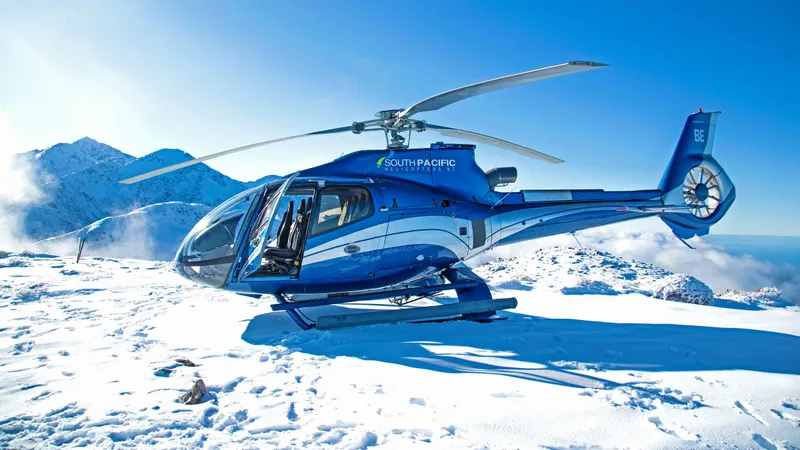 from $501
Premium Experience
from $501
Premium Experience 45-Minute Helicopter Whale Watching Experience
A helicopter can do what neither boat nor plane can: hold position above a surfacing sperm whale while you frame the shot, snow-capped mountains behind. The 45-minute flight…
- Hover in place above surfacing sperm whales
- Best photography platform of any tour format
- Small group, up to six guests
- Kaikōura Ranges as your backdrop
The Three Formats Compared
Every format works off the same premise: sperm whales are resident off Kaikōura year-round, and boats, planes and helicopters all operate under the same set of national rules for how close they can legally get. What changes between them is time, comfort, refund policy and price. Last verified: August 2026.
| Aspect | Boat | Fixed-wing flight | Helicopter |
|---|---|---|---|
| Price from (per person) | $103 | $162 (30 minutes) | $501 (45 minutes) |
| Time actually out | About 2 hours on the water of roughly 3.5 hours total | 30 minutes airborne | 45 minutes airborne, includes a scenic landing |
| Vessel or aircraft | Purpose-built catamaran, wheelchair accessible | Gippsland GA8 Airvan, 7 passengers plus 1 pilot | Helicopter, maximum 6 guests |
| No-sighting refund | 80% of the fare | None published | None published |
| Swell | Open South Pacific water, felt on board | None, you're above it | None, you're above it |
| Legal distance from a whale | Approaches from behind and to the side, never head-on | No lower than 150 metres over the sea; 150 metres horizontally below 600 metres | Same aircraft rule; the only format that can hold position over a surfacer |
Read it as a trade, not a ranking. The boat trades altitude for time and a refund; the flight trades time for altitude and a wider view; the helicopter costs more than either and adds the one experience neither can offer, touching down partway through the tour.
Which Format Suits You
If you get seasick easily
choose the whale watch flight or the helicopter; neither leaves the ground, so there's no swell to fight.
If a refund matters more to you than the view
book the boat; it's the only format with a published no-sighting refund, 80% of the fare.
If you want the widest single view of the coastline and the Seaward Kaikōura Range
a fixed-wing flight covers more ground in 30 or 45 minutes than the boat or the helicopter can.
If your budget sets the choice
the boat is the cheapest of the three at $103 per person and gives you the longest time actually out.
If you want something the other two genuinely can't offer
the helicopter's 45-minute tour includes a scenic landing partway through the flight.
What the Boat Gives You That the Air Cannot
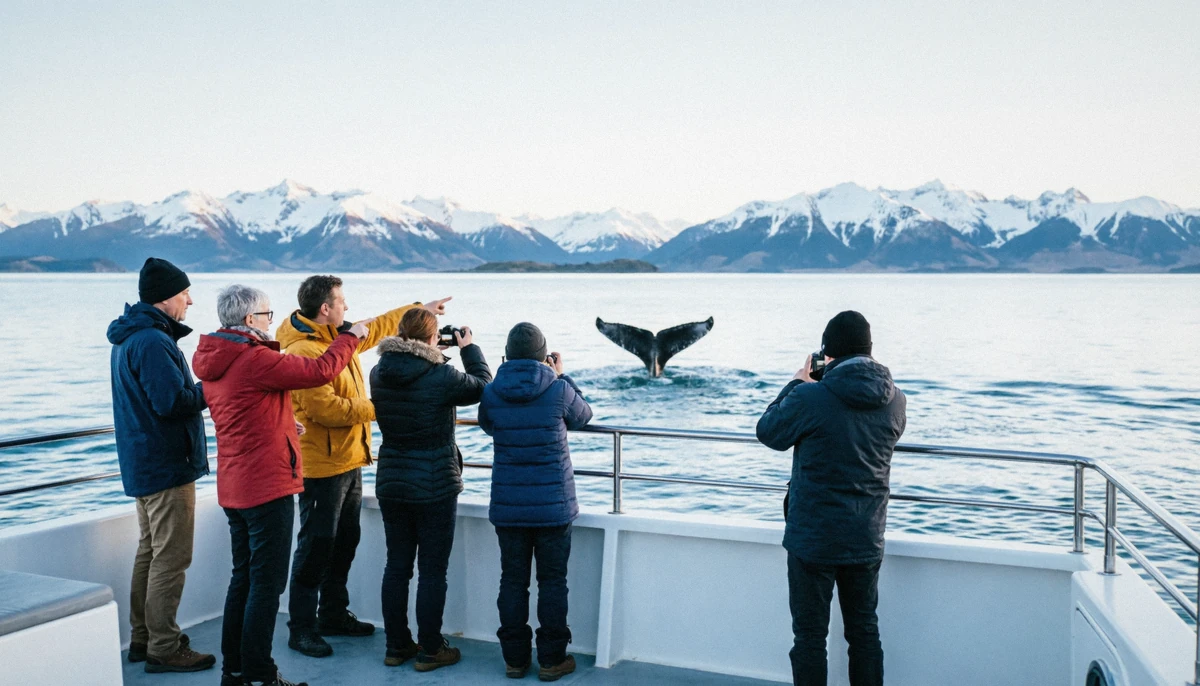
The Whale Watch Kaikōura cruise is listed as 3.5 hours, and about 2 hours of that is spent on the water once the shuttle to and from the marina is accounted for. That's more time near the surface than either aerial option offers by a wide margin, and it's time at eye level with the sea rather than looking down on it. The catamaran approaches whales from behind and to the side rather than head-on, the same rule every operator here follows, and the boat is wheelchair accessible, which neither aerial format is.
The trade is the one thing altitude removes: the boat runs on open South Pacific water, and the swell is real. If motion sickness worries you more than missing the water-level view, the aerial options below solve that outright. If it doesn't, the boat is the only format built around giving you the longest stretch of time actually looking for a whale, not just flying past where one might be.
Last verified: August 2026.
What a Fixed-Wing Flight Actually Shows
The whale watch flight is operated by Wings Over Whales in a Gippsland GA8 Airvan, a single-engine aircraft carrying 7 passengers plus 1 pilot under large dome windows built for looking down rather than out the side. The 30-minute flight starts at NZD 250 (≈ USD 148), and a 45-minute Extended Whale Flight & Mountain Scenic Tour, which pairs the coastline with the Seaward Kaikōura Range, starts at NZD 395 (≈ USD 233), close to the $233 extended whales and mountains scenic flight lists on this site. Converted at NZD 1 = USD 0.59, checked August 2026.
What you actually get from the air is coverage, not proximity. The legal minimum altitude and horizontal-distance rules apply to every aircraft here, so a plane doesn't get any closer to a surfaced whale than the boat does; it gets a wider frame around it, the coastline, the canyon's edge, and on the extended route, the mountains behind the town. One search worth correcting directly: people look for a seaplane whale watching flight in Kaikōura, and there isn't one.
Every fixed-wing tour here flies from Kaikōura Aerodrome on wheels, not off the water. The operator states plainly on its own site that sightings aren't guaranteed because these are wild animals, and it does not publish a no-sighting refund. Last verified: August 2026.
When the Helicopter Earns Its Price
The 45-Minute Whale Watching Helicopter Tour on this site is operated by South Pacific Helicopters NZ, departing 617 State Highway 1, carrying a maximum of 6 guests and including a scenic landing partway through the 45 minutes, from $501 per person. It's the most expensive of the three formats and the only one that can hold position over a surfacing whale rather than passing by, since a helicopter can hover where a fixed-wing aircraft has to keep moving.
A second operator, Kaikōura Helicopters, flies separately from the tour listed on this site: 30 minutes from NZD 360 (≈ USD 212), 40 minutes from NZD 505 (≈ USD 298), and 60 minutes from NZD 670 (≈ USD 395). That operator states on its own booking pages that it sees whales 97% of the time and that it has no no-sighting refund policy; that figure and that policy are Kaikōura Helicopters' own claim about its own flights, not a figure this site's tour publishes or a claim we can verify independently. Whichever helicopter you book, weigh the scenic landing and the hover capability against the price gap to the flight, not against a promise of a closer whale.
Last verified: August 2026.
Refunds and What Happens When No Whale Turns Up
This is the sharpest line between the boat and the air. Whale Watch Kaikōura publishes a success rate of over 90% in finding whales on its tours and refunds 80% of the fare on any cruise where no whale is seen, with "whale" defined by the Marine Mammals Protection Regulations 1992 so that dolphins and seals seen along the way don't count against the refund. Neither Wings Over Whales nor South Pacific Helicopters NZ publishes an equivalent policy.
Wings Over Whales says outright that you may not see anything because these are wild animals, and offers no refund on that basis.
The mechanics of how the boat's refund actually gets processed, and the full cancellation and rebooking picture if the weather turns instead of the whales staying away, live on our seasickness and cancellations guide rather than here. The short version for choosing a format: if a refund matters to your decision, it only exists on one of the three.
Seasickness and the Swell
The boat is the only format where the sea itself is part of the experience, for better and for worse. It runs in open South Pacific water and the swell can be felt on board; the flight and the helicopter remove that variable entirely by never touching the water. If you already know rough water affects you, that alone is reason enough to pick an aerial format regardless of price.
For the operator's own onboard remedies, the shop, the tablets and the motion-sickness VR goggles it carries, see our full seasickness guide, which covers the boat in more depth than this comparison needs to.
Cost Per Minute With a Whale, the Honest Version
No operator here, boat or air, publishes how many minutes a trip actually spends near a whale once one is found; a sperm whale rests at the surface only briefly before diving again, and that window isn't something any of the three formats can promise in advance. What we can calculate honestly is cost per minute of scheduled time out, which is a fair proxy even if it isn't literally minutes spent beside a whale.
| Format | Price | Time out | Cost per minute of time out |
|---|---|---|---|
| Boat | $103 | About 120 minutes on the water | ≈ $0.86 |
| 30-minute flight | $162 | 30 minutes airborne | ≈ $5.40 |
| 45-minute helicopter | $501 | 45 minutes airborne | ≈ $11.13 |
By this measure the boat is, by a wide margin, the cheapest way to spend time actually looking. What the flight and the helicopter sell instead is compression and altitude: the same coastline and, on a good day, the same whale, seen from above in a fraction of the time. And because the 150-metre and 300-metre distance rules apply to every aircraft regardless of price, paying more for the helicopter buys you hover time and the scenic landing, not a closer view of the whale itself.
Last verified: August 2026.
Doing Two Formats in One Day
Nothing stops you combining formats, and plenty of visitors do. The boat's 7:45am or 10:30am sailings both finish with time to spare before an early-afternoon flight or helicopter slot, since the aerodrome and the helicopter's State Highway 1 departure point both sit within a few minutes of the boat's Whaleway Station Road terminal. A boat plus a 30-minute flight runs about $265 per person combined; a boat plus the 45-minute helicopter runs about $604.
Neither pairing needs you to leave Kaikōura township between bookings.
The honest case for pairing them isn't a better chance of a sighting on either leg individually, it's two different vantage points on the same resident population in the same day: eye level in the morning, then the whole coastline laid out from above in the afternoon. If budget only allows one, the decision box above is the faster route to an answer. Last verified: August 2026.
Frequently Asked Questions
Is the whale watching flight better than the boat in Kaikōura?
Do you see more whales from the air or from a boat?
Neither format publishes a comparative sighting rate. Whale Watch Kaikōura publishes a success rate of over 90% for its own cruises; neither aerial operator publishes an equivalent figure for its own flights, so a direct comparison isn't something either side has made public.
Is the helicopter whale watching tour worth the extra money?
It's worth it if the scenic landing and the ability to hover over a surfacing whale matter to you specifically; at $501 per person it's the most expensive format, and it buys those two things, not a higher chance of seeing a whale in the first place.
Can you do the boat and the flight on the same day?
Yes. The boat's morning sailings leave time before an early-afternoon flight or helicopter slot, and both aerial departure points sit close to the boat's terminal on Whaleway Station Road. See the section above for the combined pricing.
Which whale watching option is best if you get seasick?
The flight or the helicopter, since neither touches the water. The boat runs in open South Pacific swell that can genuinely be felt on board, even though the operator sells motion-sickness remedies and carries VR goggles for it.
How close can a plane fly to a whale in New Zealand?
Under the Marine Mammals Protection Regulations 1992, aircraft can't fly below 150 metres above the sea except for take-off and landing, and below 600 metres they can't come closer than 150 metres horizontally from a point directly above a marine mammal. No more than three vessels or aircraft may be within 300 metres of the same animal at once.
If you're choosing blind, start with the boat: it's the cheapest, it gives the most time actually out, and it's the only format that puts money back in your pocket on a genuinely empty trip. Add a flight or the helicopter later in the day, or on a return visit, once you know whether the water level or the wide view is what you actually wanted from every way to meet the whales at Kaikōura.